



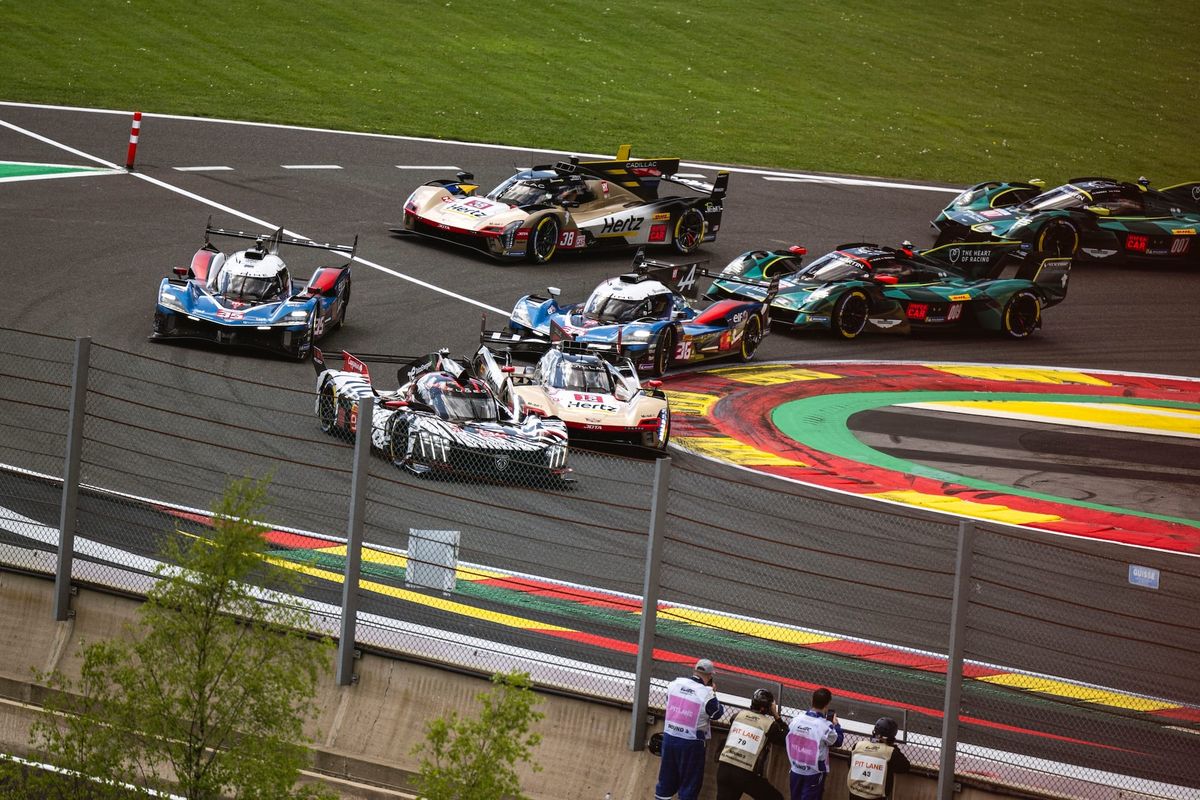
Sportscar racing is in a good place. More manufacturers are competing at the top level than at any point in recent memory, the racing has been close, and multiple teams can compete for wins regularly.
The convergence of LMH and LMDh has succeeded, beyond all doubt.
But regulations never last forever, and 2030 is expected to bring the next generation of top class prototypes to both the FIA World Endurance Championship, and the IMSA Sportscar Championship.
We may get the first official details at Le Mans next week, at the ACO's annual press conference. Here's what the manufacturers involved in the discussion are telling us to expect.
A single ruleset is likely
Running cars to two rulesets simultaneously introduces complexities with regards to balancing the cars, with Balance of Performance (BoP) used to varying degrees of success.
The easiest way to simplify things is, clearly, to have cars running to a single ruleset in both championships.
Discussions between the manufacturers have been ongoing for some time about how the next set of regulations should work and what they look like. As may be expected, each manufacturer has their own aims at the top of the priority list, and those aims differ amongst each manufacturer.
What does seem to be a common thread, though, at least for some manufacturers, is having a single ruleset for both IMSA and WEC.
Here's what Porsche's Urs Kuratle, head of LMDh motorsport at Porsche, had to say on the subject, when On The Apex spoke to him earlier in the year.
'We're trying to play a role with [the 2030 regulations]', said Kuratle.
'We stay in the discussions, how to create those regulations. Having joint regulations, LMH and LMDh, is definitely something we are looking for and trying to help and invest a lot into creating those regulations.
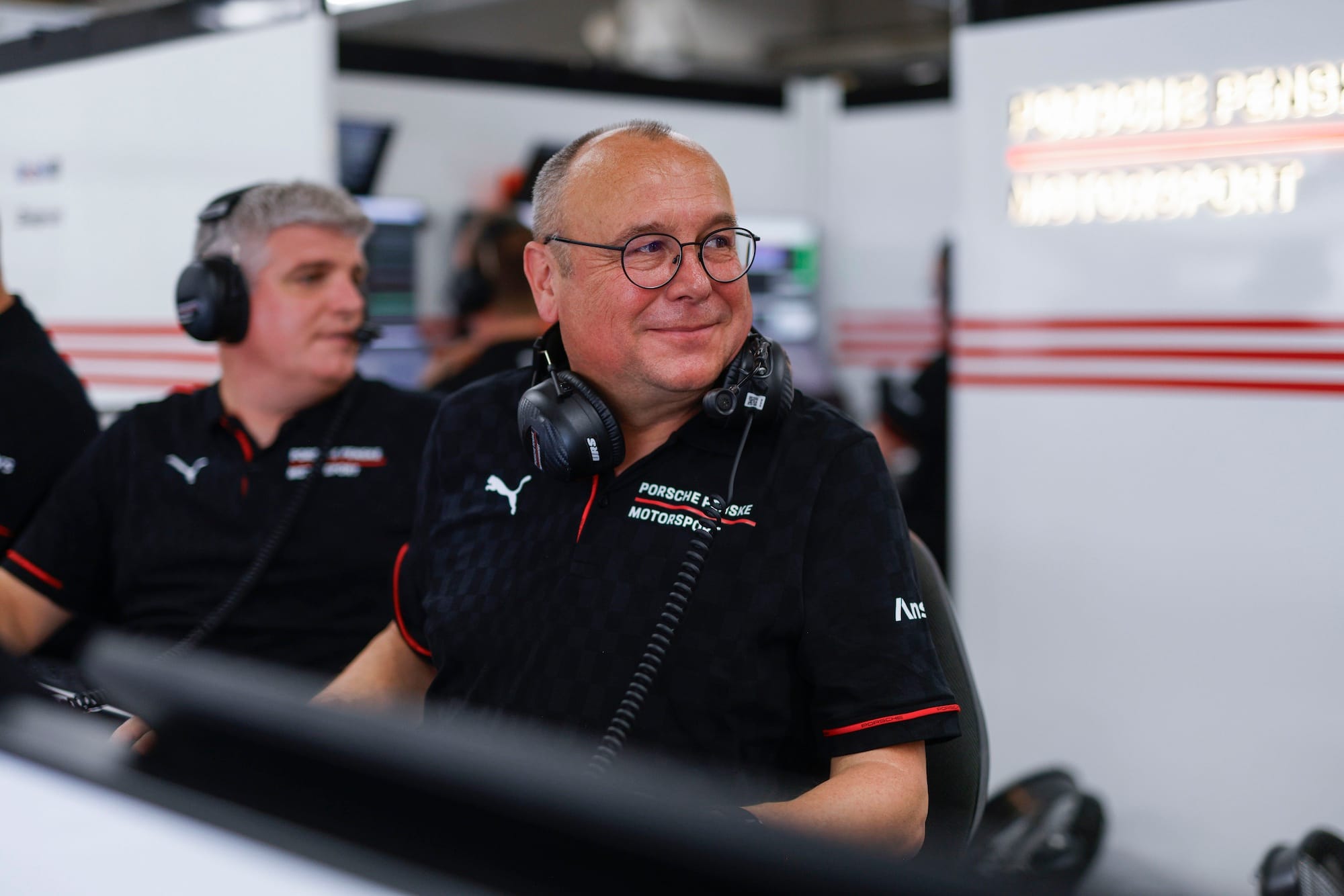
'I think it's [single ruleset] important and it's maybe not the only way to go forward in sports car racing, but it's one way of going forward in in sports car racing, which definitely makes a lot of sense. We try to be part of it and we help as much as we can to create those regulations.'
Everything about these new regulations seem to be up for discussion at the moment, with a lot of negotiation between the various parties still to take place, as IMSA President John Doonan told media at Daytona in January.
'We had an awesome meeting last September in Paris, with all the manufacturers, the ACO, the FIA. I left that room with a lot of energy about maybe taking another step where we bring together the two different sets of technical regulations and try to, for 2030 as a target, to have one set of technical regulations.
'I think, based on our annual steering committee meeting with Pierre (Fillon), Frederic (Lequien), and Thierry Bouvet, and Simon Hodgson and Ed (Bennett) and Jim France on my side. It was a lot of that same discussion about wanting to achieve that.'
Doonan's strength to IMSA here is his manufacturer background, having been director of Mazda's motorsport efforts for 8 and a half years. This included the years when Mazda raced in the DPi class, the forerunner or predecessor to the LMDh ruleset, starting in 2017.
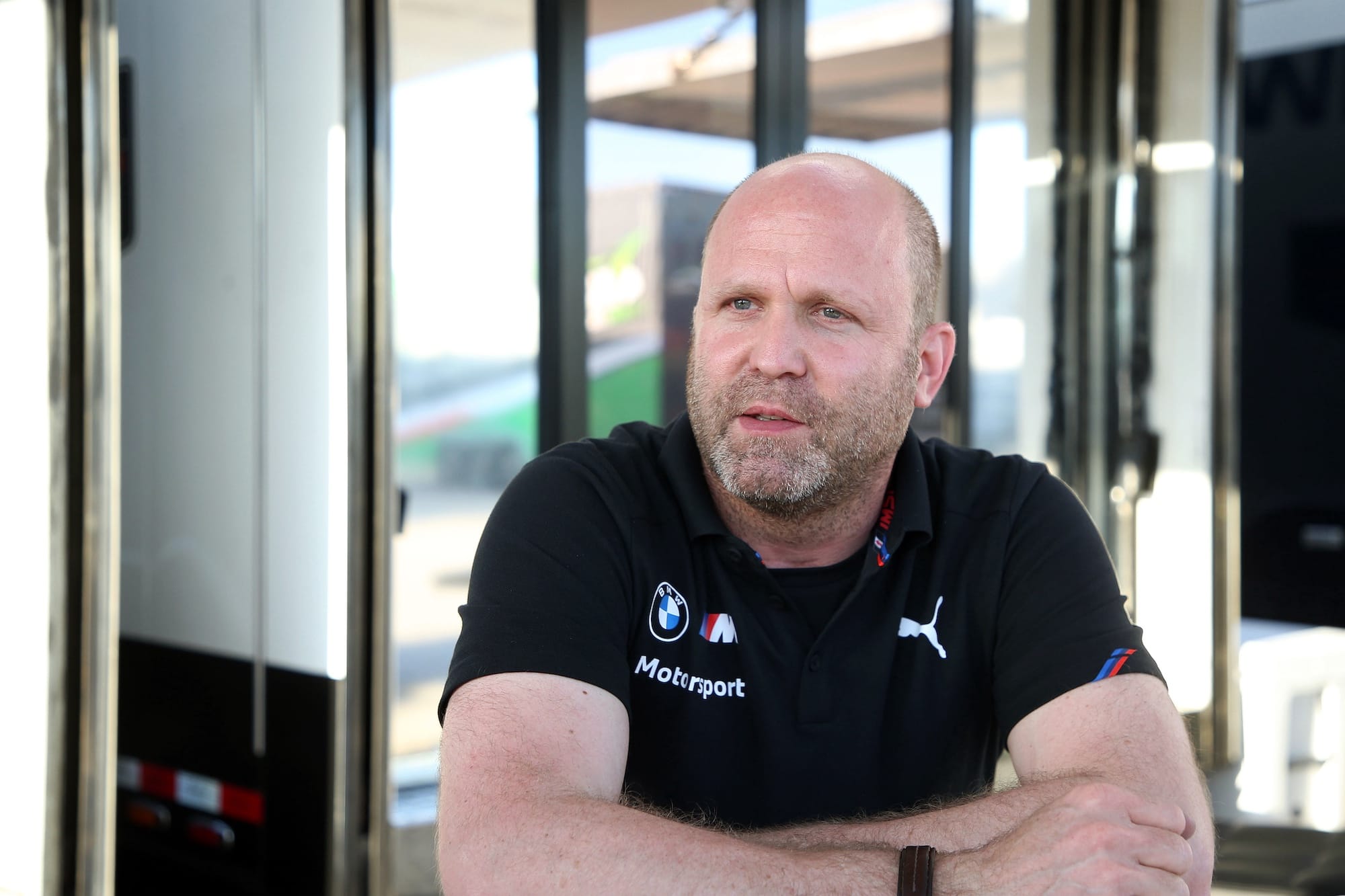
BMW's Andreas Roos, head of BMW M Motorsport, agreed with Porsche's Kuratle, as did McLaren's James Barclay.
'For BMW, a clear base must be that we have one common ruleset, for all, let's say, Hypercars,' Roos told On The Apex.
'So there's only one ruleset, not having LMH and LMDh regulations.'
McLaren toed a similar line as well. In response to a question from On The Apex about the 2030 regulations and McLaren's position on them, McLaren Endurance team principal James Barclay said, in a McLaren roundtable:
'Evolution not revolution,' said Barclay.
'When you look at the constituent parts, there's a lot that's really good there. So I think evolution feels better than revolution, focusing on what's built up this great era while keeping the intrinsic parts of that.
'But, maybe improving the elements which we know is quite challenging, when you have quite different technical rules, in LMH and LMDh. I think there's more we can... one would be a fantastic foot forward.'
As a team coming into the series in 2027, though, how involved are McLaren in these discussions?
'As a committed team coming into the category, we're working with our spine partner Dallara and our supply chain. Yes, it's really fortunate that we've been included right from the start.
'Yeah. we'll play a really active role in that, but obviously take a lot of input and experience from those who have been competing, but I think we can also bring a fresh perspective to that as well,' said Barclay.
So: it seems there is at least some alignment here. Even Toyota broadly agrees, although the positioning of technical director David Floury's statement, in an exclusive conversation with On The Apex, was a little more cautionary.
'As a general principle, we welcome the idea to bring the cars, the two regulations closer together,' Floury explained, 'but obviously we need to understand the details.'
The level of spec parts remains a question
Some teams want to bring over as many constituent parts from the current regulations, to the new ones, in the interest of cost control.
'Clearly for us on BMW's side, the goal is to have as many parts to take over from the current regulations into the new regulations,' said BMW's Roos.
'The main target must be cost control, keep the costs under control, and therefore we clearly have to have a regulation which is cost efficient and suits to most of the manufacturers.'
Fundamentally, the manufacturers all want different things included in the regulations and are, ultimately, working to their own ends and goals.
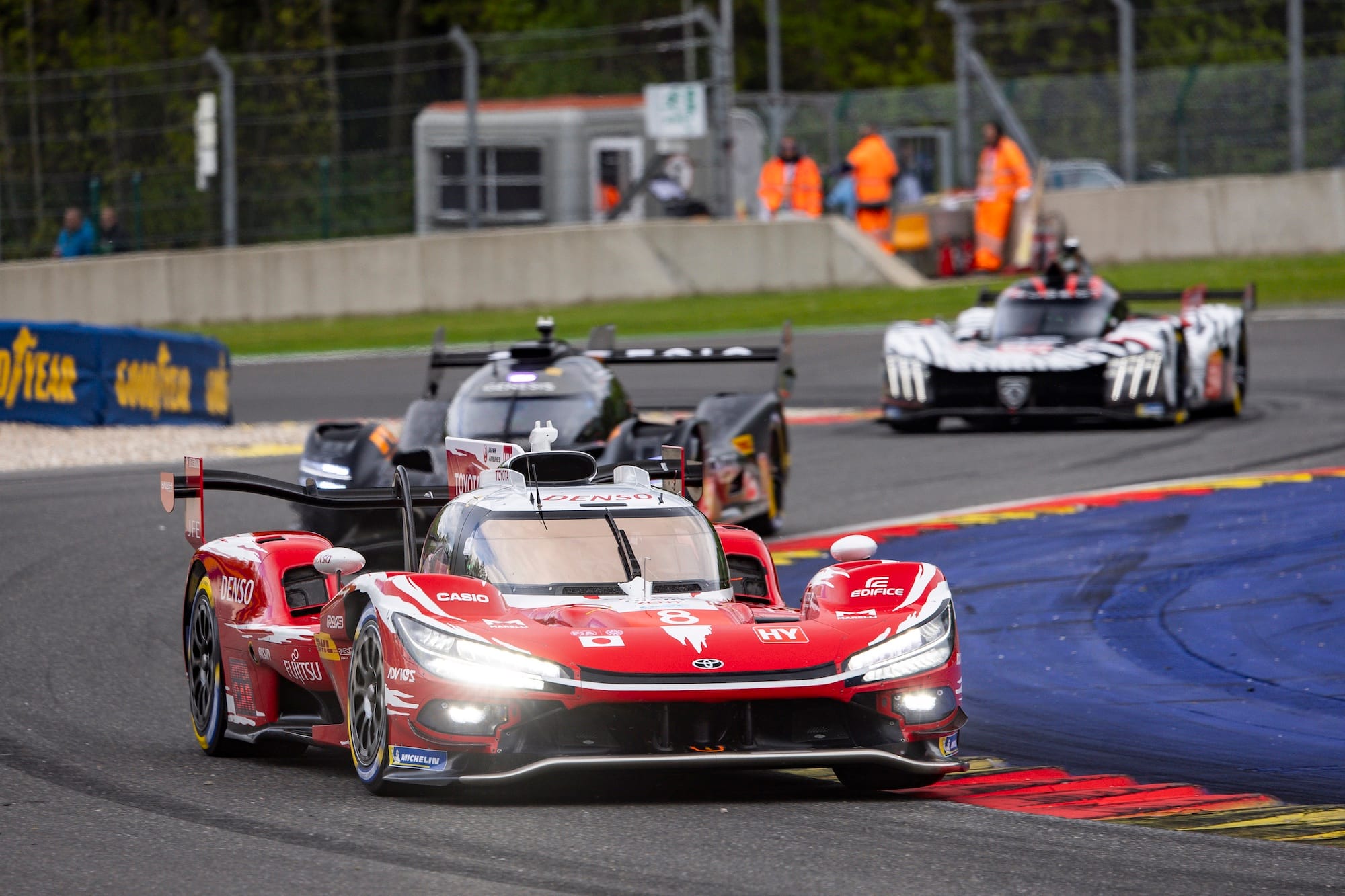
The LMH-rules manufacturers, in particular, do not want to use spec parts or chassis, as Toyota technical director David Floury told On The Apex.
'As Toyota, we are not interested in racing cars that we buy from a supplier and a hybrid system that we buy from another supplier,' he said.
'We go racing to develop people and to develop ever better cars. When you use a hybrid system on a spine that is developed by someone else, you lose most of the knowledge transfer you can achieve through racing.'
Hybridisation: likely, but in what form?
It's hard to predict what this new, hypothetical, unified ruleset may include. It'll almost certainly involve some kind of hybrid element as this is important for manufacturer marketing, plus R&D as Floury says. Could there be a spec system for the manufacturers who don't want to develop racing hybrid technology, and for those that do, they can manufacture their own? Possibly, possibly not.
Whether this will power the front wheels, as in the current LMH regulations, or rear wheels, like with the LMDh regulations, is unknown. Front wheel hybrid is more complex as it makes the car become all-wheel-drive when activated, but is also more visually exciting as the cars can corner quicker. Rear wheel hybrid is cheaper and less complex. It's a toss up.
Both Ferrari and Toyota have made it clear they do not want a chassis spine provided to them, like the current LMDh regulations stipulate. But then BMW's Roos implied, above, that BMW do want that, with his 'the goal is to have as many parts to take over from the current regulations' comment.
Porsche's Kuratle, meanwhile, wouldn't be drawn on commenting either way when asked by On The Apex.
'It would not be clever to say it is to be a 50/50 share from the current regulations or anything like this,' said the German.
'It simply should make sense. And also since the existing rule sets are in place, a lot of experience has been created. People can go and talk to their board and find out what the OEM's goal is by now?
'Things may have changed a bit, so it would not be clever to say it's 50/50, 40/50 or 40/60 from either set of regulations,' he finished.
So, four manufacturers with very different views on the future of the regulations, even if the direction of travel is broadly the same.
These are the kinds of "details" that Floury cautioned need to be sorted. It's likely some compromises will have to be made in order to get the regulations passed and agreements made. Others may quit if they don't get what they want, as we've seen happen many times before.
The question, really, is: who will compromise and who will quit? That's not likely to be something we'll find out any time soon.
The alternatives to BoP
Balance of Performance is a constant discussion point in sportscar racing.
WEC have reduced the number of talking points by no longer releasing the BoP figures publicly. Even the teams don't have the full picture. But it's still much-discussed and talked about, and not always positively.
 Phil Oakley
Part of the problem derives from the complexities of balancing two similar but different rulesets against each other.
The other problem is the prototype customer market not working out like the hugely successful customer market in GT3 racing. But that's a discussion for another time...
Again, Kuratle wouldn't be drawn on commenting about BoP, but he did say there are alternative 'tools' under discussion.
'I mean that discussion is one obviously,' he said, when On The Apex asked about the possibility of BoP being removed or its influence reduced for 2030.
'But I have to give you the same answer: it has to make sense at the end of the day. Whether it be BoP, and to what extent... it needs to make sense.
Phil Oakley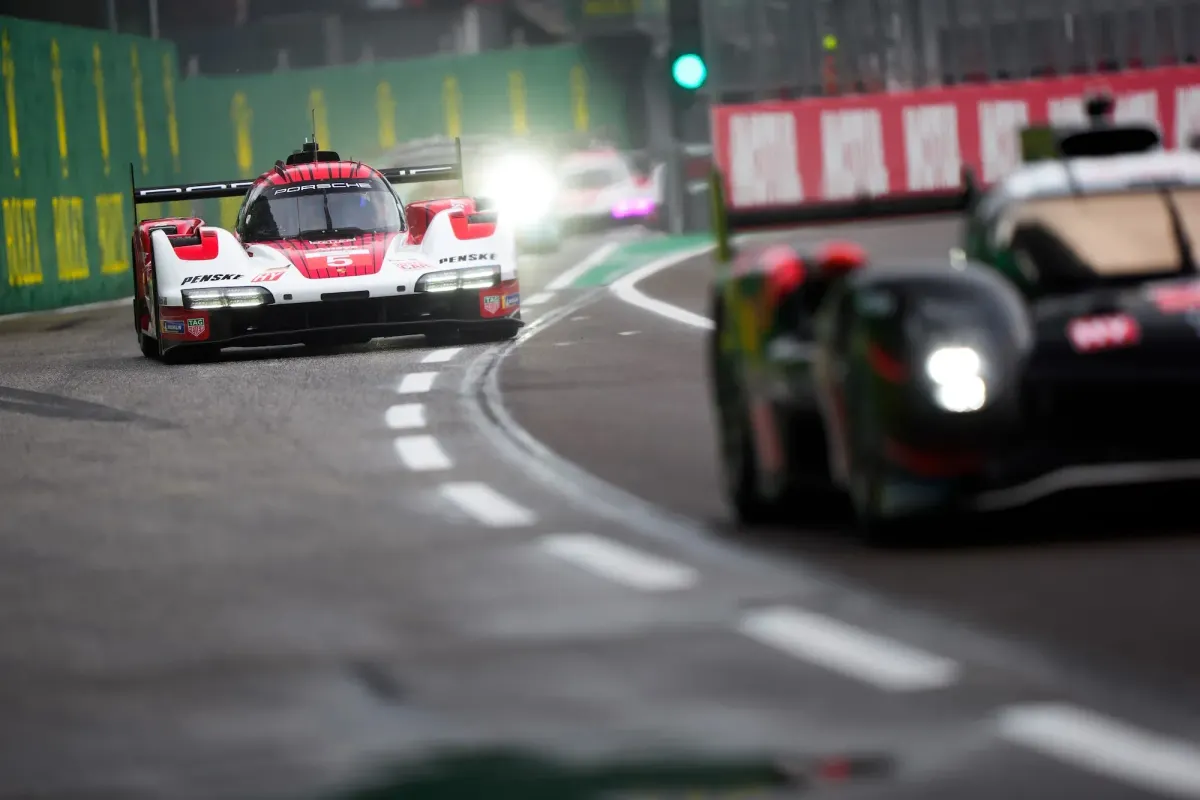
'There's a number of tools. The governance bodies can control the cost, which is at the end of the day, the goal from BoP.
'Which one is the most sensible for that one common rule set? It's a discussion. There will be a big discussion, that much is true, but all I can say is it has to make sense.
'It would be stupid to rule out one or another tool from the governance bodies at that stage. It's common sense that it has to be regulated one way or another,' he finished.
Cost cap 'a consideration'
Toyota's Floury, meanwhile, believes a cost cap would be incredibly hard to regulate fairly.
'I think it could be definitely a consideration,' said the Frenchman.
'However, I think implementing a cost cap is probably not something that is very easy. Especially when you have manufacturers racing in one championship, in the other championship, in the two championships.
Phil Oakley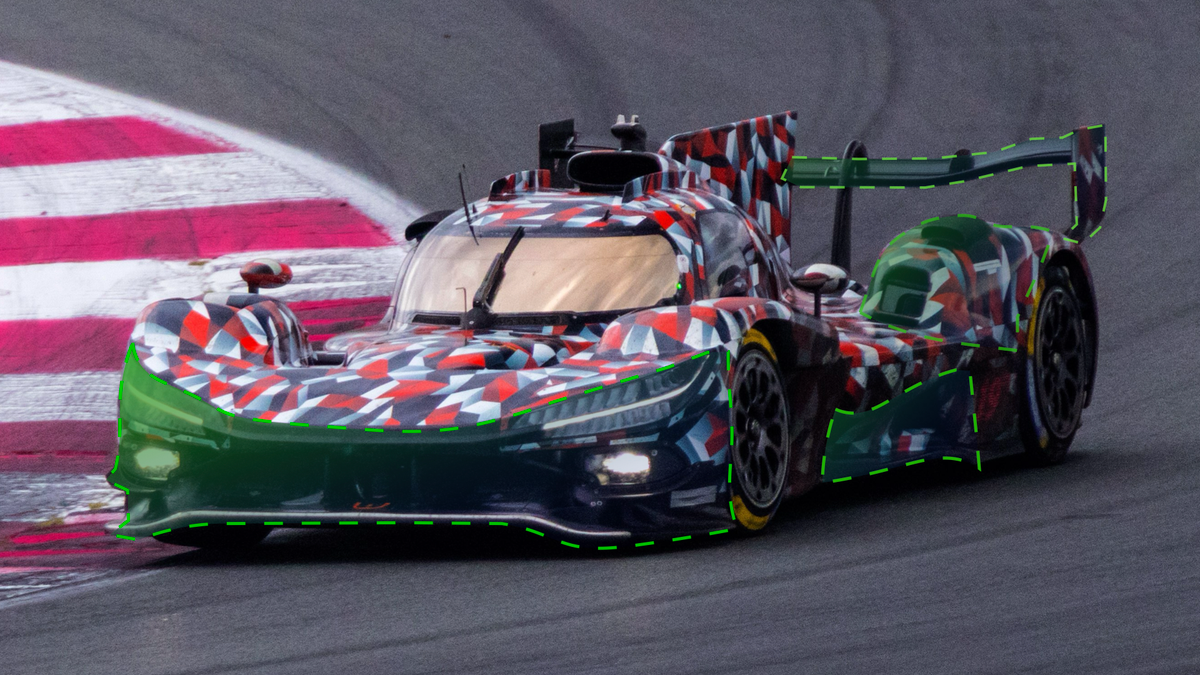
'How do you consider the costs accordingly? It's going to be very difficult. So far the cost caps have been applied in championships where manufacturers have the same number of cars in the championship and they race only in a single championship.
'But when you have manufacturers operating with external teams, such as BMW with WRT, Alpine with Signatech, Cadillac with JOTA, I guess it makes it even more difficult to compare this kind of organisation with an organisation such as us where everything is integrated.
'I see quite some challenges to apply this to endurance racing.'
With so many manufacturers involved plus the ACO, IMSA and the FIA, finding a consensus where everyone is happy will be hard. There'll likely be at least one party not entirely happy with the direction of the new regulations.
The details revealed at Le Mans, if we get any at all, will likely be scant. The least amount of info needed to actually make the announcement, thanks to the amount of detail that still needs to be decided. It's possible not much at all has actually been set in stone, with a lot up in the air.
'Maybe some directions can be announced at Le Mans,' Toyota's Floury said.
But he cautioned that deciding any specific details, 'will probably take longer than this, especially if we want to make the best job possible.'
Support On The Apex's independent sportscar journalism today from £1/$1/€1 a month