



The fourth round of the 2026 FIA World Endurance Championship 6 Hours of Sao Paulo was a race dictated by strategy, with all 8 Hypercar manufacturers relatively closely packed together on pace around the 4.309km circuit.
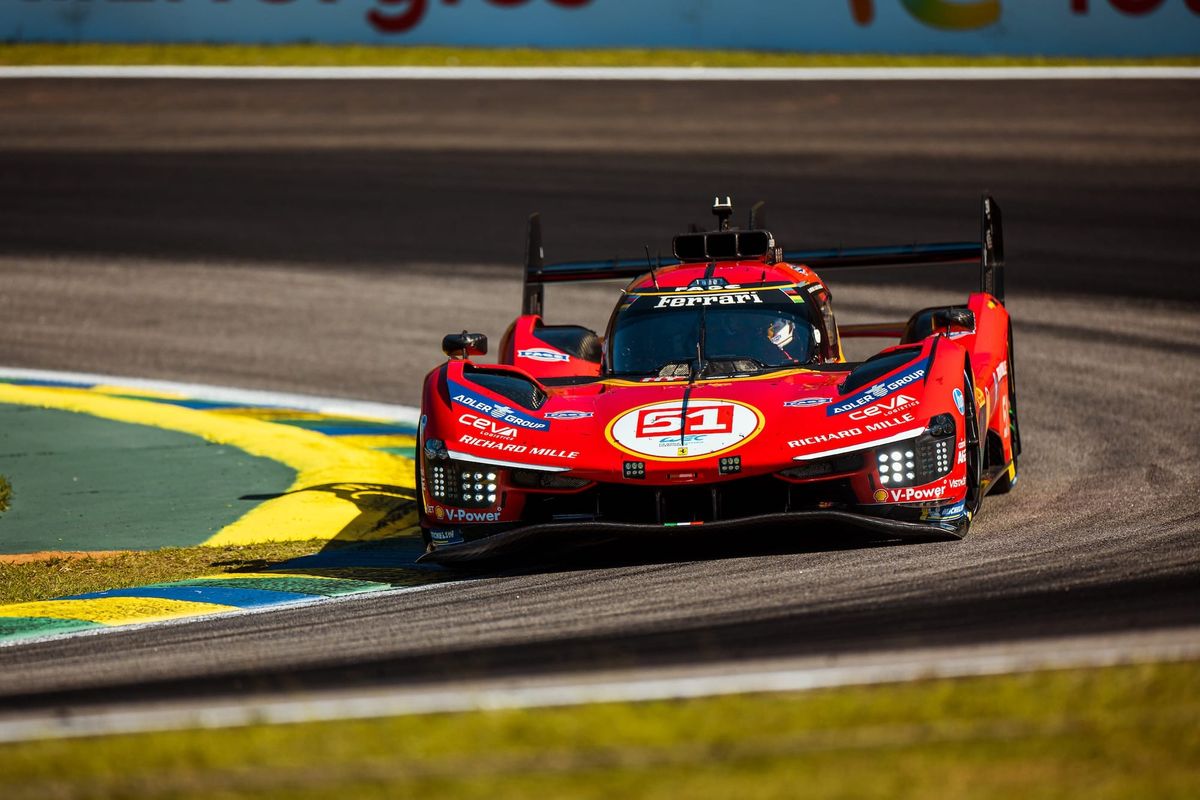
But one car came through the field and seemed well-placed to take victory, right up until the last few laps: the #51 Ferrari of James Calado, Antonio Giovinazzi, and Alessandro Pier Guidi.
Let's take a look at how the trio achieved a second-place finish, just over 2 seconds adrift of the winning #15 BMW.
Stellar pace
No two ways about it: Ferrari were quick in Sao Paulo.
When you look at the 20% average pace, the two factory Ferraris were both quicker than the #15 BMW, although by incredibly small margins.
It should be noted that Cadillac were the quickest team on average, specifically the #12 car. Alpine too were quick, and Aston Martin were right up there.
All three weren't able to take victory for various reasons: Cadillac dropped the ball on pitstops and were changing tyres more frequently than rivals (which may be contributing to having faster pace); Alpine gambled on a strategy requiring a safety car that never came; and both Aston Martin's cars started too far down the order after lacklustre qualifying.
Giovinazzi does the hard yards
The #51 Ferrari started 11th in the hands of Giovinazzi. By the second lap he was up to 9th, and by the end of his first stint in the car, on lap 43, he was up to fourth, although this was partially due to the pit stop cycle.
Once the cycle had shuffled out, he'd dropped back to 11th. Methodically, the Italian worked his way back up to 2nd by lap 85, before handing the car over to teammate Pier Guidi.
During that first 43-lap stint, Giovinazzi's pace was around half a second off the leading #12 Cadillac of Will Stevens.
The gap to Stevens, meanwhile over those 43 laps, did widen, but Giovinazzi was able to keep it relatively stable, closing at 11.7 seconds on lap 41, before either car pitted.
After the stops had shaken out the order, Ferdinand Habsburg in the #35 was leading. Again Giovinazzi was able to keep the gap stable, just under 30 seconds adrift of the lead, while moving up to second by the end of the stint.
Pier Guidi's charge forwards
When Pier Guidi replaced Giovinazzi on lap 86, he fell back to seventh after an 84.6 second stop. During his first stint in the car he was able to retake second.
He closed the gap up to one of the leading cars, the #15 BMW of Raffaele Marciello, massively, from 20 seconds when he climbed in to 3.1 when he climbed out on lap 159.
He was helped here by a 9-second quicker stop on lap 126. Most of the work catching Marciello was done in this next stint, from lap 127 to 160.
Marciello was also catching the leader in this period; Antonio Felix da Costa in the #35. They fought on track for the lead, with Marciello overtaking off-track at turn 4 then being told by his team to give it back, lest the stewards penalise him for overtaking off the racing surface.
Calado battles with Vanthoor
When Calado climbed in, then, he sat third behind Charles Milesi, who'd replaced Da Costa in the #35 Alpine when the former stopped on lap 153, and Marciello, who'd pit on lap 169, nine laps after Calado got into the #51 Ferrari.
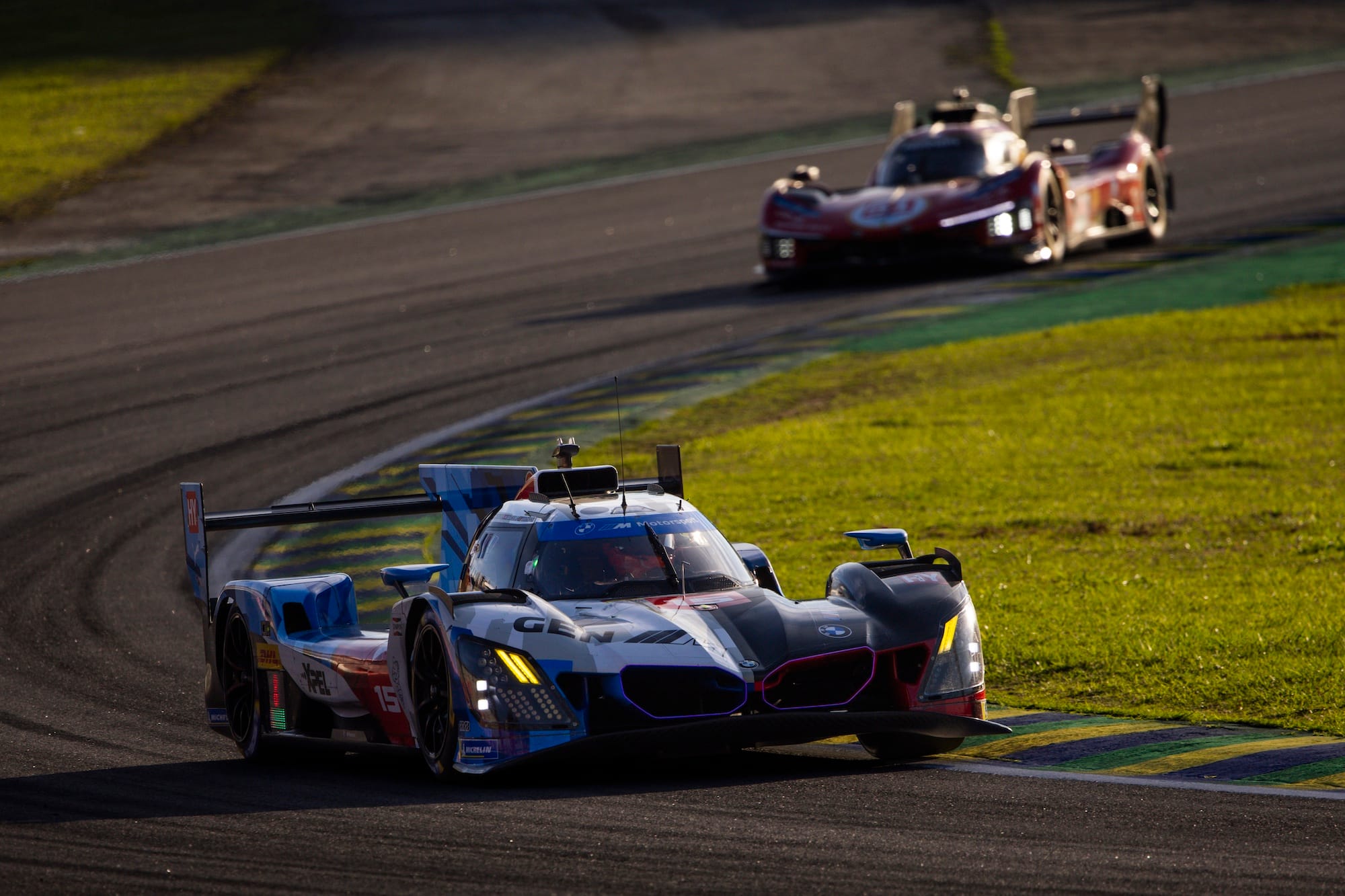
Hindsight tells us that Alpine's strategy gamble of banking on a safety car didn't play out, with the race running almost fully green, apart from two brief full course yellows in the course of six hours. This essentially made it a race between Calado and Dries Vanthoor, now in the #15 BMW, in the last two stints, although none of the three teams were to know the race would run green and take Les Bleus out of contention.
These long, in-depth posts take a lot of time and effort to put together. If you'd like to show you like these posts and want more, the best thing you can do is support us. We're fully independent and are committed to not running Google ads. You can support us for £1/$1/€1 a month. Thank you!
Regardless, once the fourth pit stop cycle had shaken out, on lap 171, Milesi led from Calado and Vanthoor in third, with the Ferrari around 8.5 seconds off and Vanthoor a further few seconds adrift.
The gap actually widened here, with Milesi pushing hard to build as big a gap as possible in preparation for his final stop. His average 20% pace during this period, running in relatively clear air at the traffic-heavy Interlagos circuit, was over 3 tenths a lap quicker than Vanthoor and Calado, who were both virtually identical.
Alpine's fuel strategy gamble
The Frenchman needed to make two stops to reach the end, whereas Calado and Vanthoor only had to make one more each, so the race was on to open that gap.
He pitted for the penultimate time on lap 193. Calado pitted 8 laps later, an 81.1 second stop, whereas Vanthoor's stop a further 8 laps on was shorter, 74.2 seconds, almost 7 seconds quicker.
Calado pushed hard to close this gap in those interim 8 laps, to the tune of being 3 tenths quicker a lap on average than Vanthoor, but it wasn't enough. The Belgian exited the pits after his final stop almost 4 seconds ahead of Calado. Milesi led, but it was now clear he wouldn't make the end.
Milesi pitted for his final stop on lap 213, a 50 second stop caused primarily by a slow puncture. He needed to stop for a fuel splash anyway, but this may have been pushed later towards the end of the race if it wasn't for the puncture. His virtual fuel tank went from 53% full when he stopped to 75% when he exited the pits.
Both Vanthoor in the lead and Calado were pushing hard to either retain the lead, or in the Ferrari driver's case, to catch Vanthoor. But the Belgian's pace was better, to the tune of just under 2 tenths a lap in 20% average pace terms (a car's fastest 20% of laps, averaged out to a single lap time value), and so he was able to win. Calado did have a late surge in the last couple of laps to halve the gap down to just under 2.3 seconds at the flag, but it was too little too late.
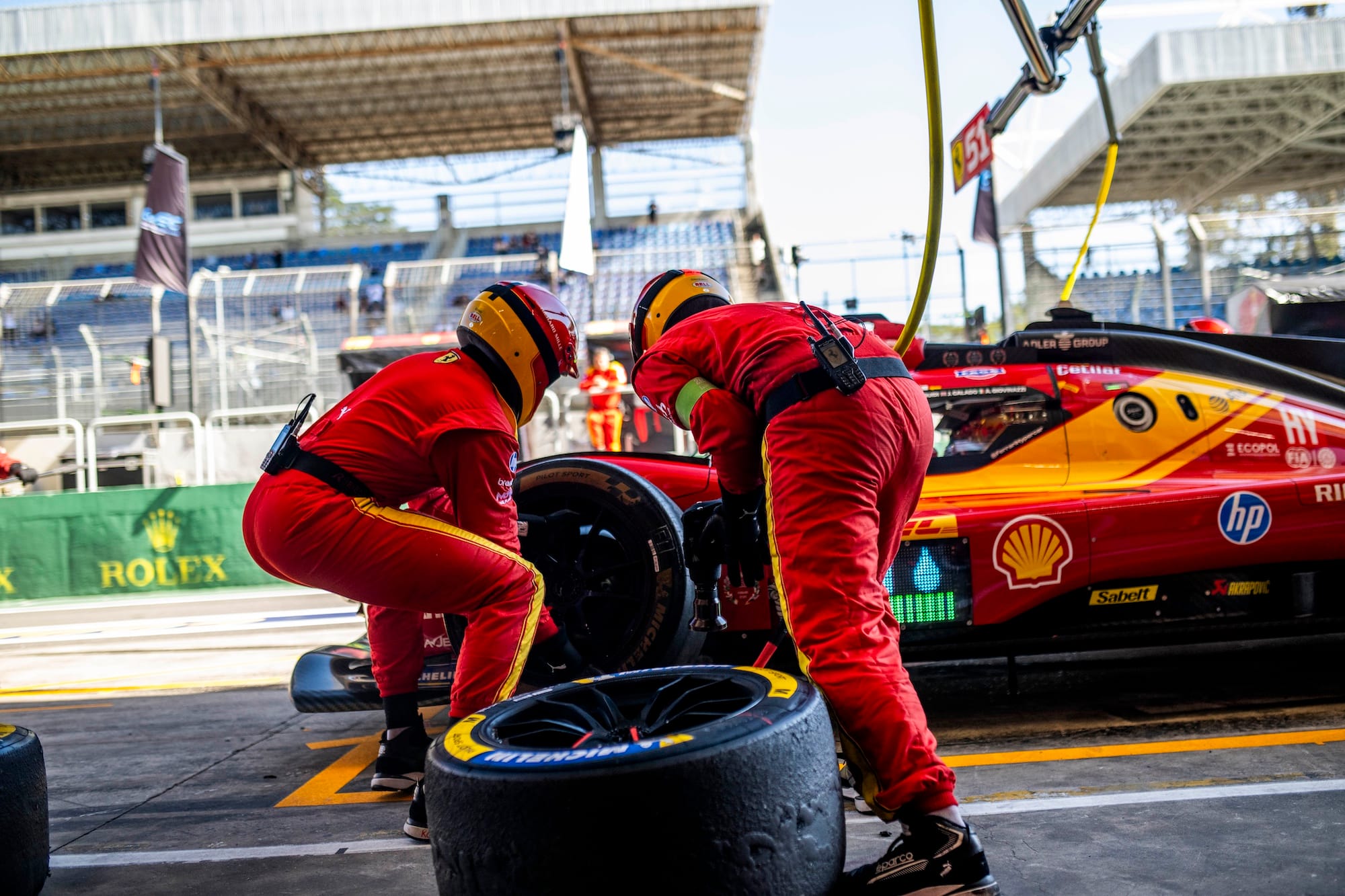
So in the end, what enabled Ferrari to take that podium? Good work in the pits; the #51 spent the second least amount of time in the pits compared to their rivals. The #15 was virtually identical to the #51, just half a second in it. The #35 Alpine pitted six times instead of five on its offset strategy, short-fueling in the first stop to gain track position.
Cadillac's woes
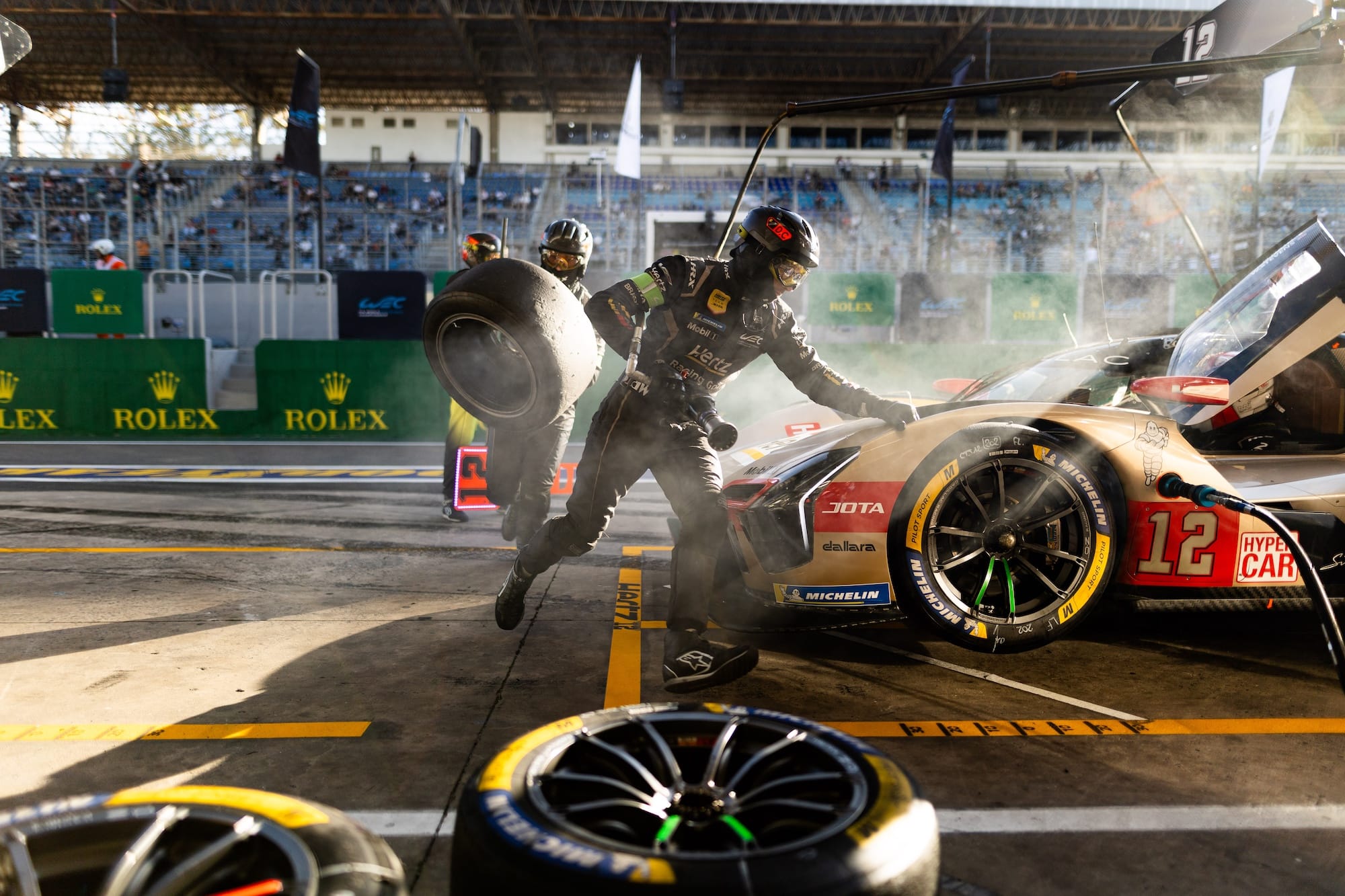
The two Cadillacs, incidentally, lost out because they spent far longer in the pits compared to the #15 and #51. The #38 Cadillac spent 9.5 seconds longer in the pits than either, while the #12, which finished third, spent 27.6 seconds longer in the pits.
Both their first stops were considerably longer than their rivals, as the crew dropped a wheel nut during the #12's stop, costing them time, and the #38's Earl Bamber didn't stop square in his box for the car's first stop, meaning the crew had to reposition the car before servicing it.
Given the #12, in the hands of Will Stevens, was just 6.7 seconds adrift of Vanthoor at the flag, with the #38 of Jack Aitken a further second off... shoulda, coulda, woulda for Cadillac.
This extra time in the pits by Cadillac was what essentially enabled Ferrari to claim the runners-up spot on the podium. Ferrari's efficiency and competency in the pits, alongside their strong pace, just 0.011 slower per lap than the #15 BMW on average, got them that second place and almost helped them towards a first win in 2026.
As it is, they'll have to wait until the race in Austin, Texas at Circuit of the Americas to try and get that first win of the year, in an attempt to retain their manufacturers' title from 2025.