



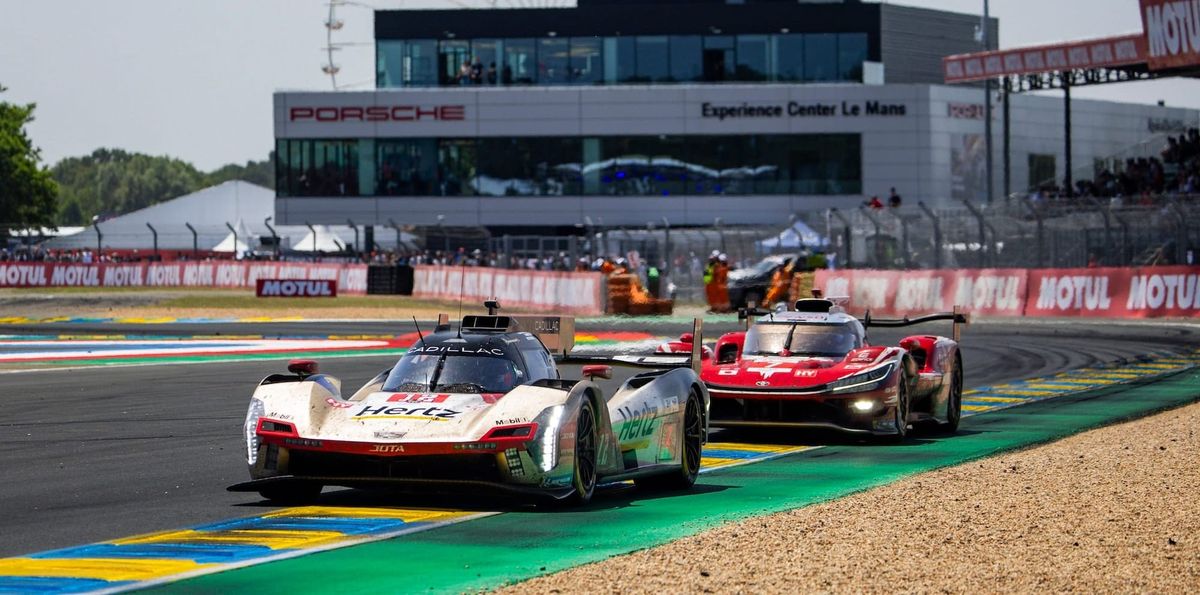
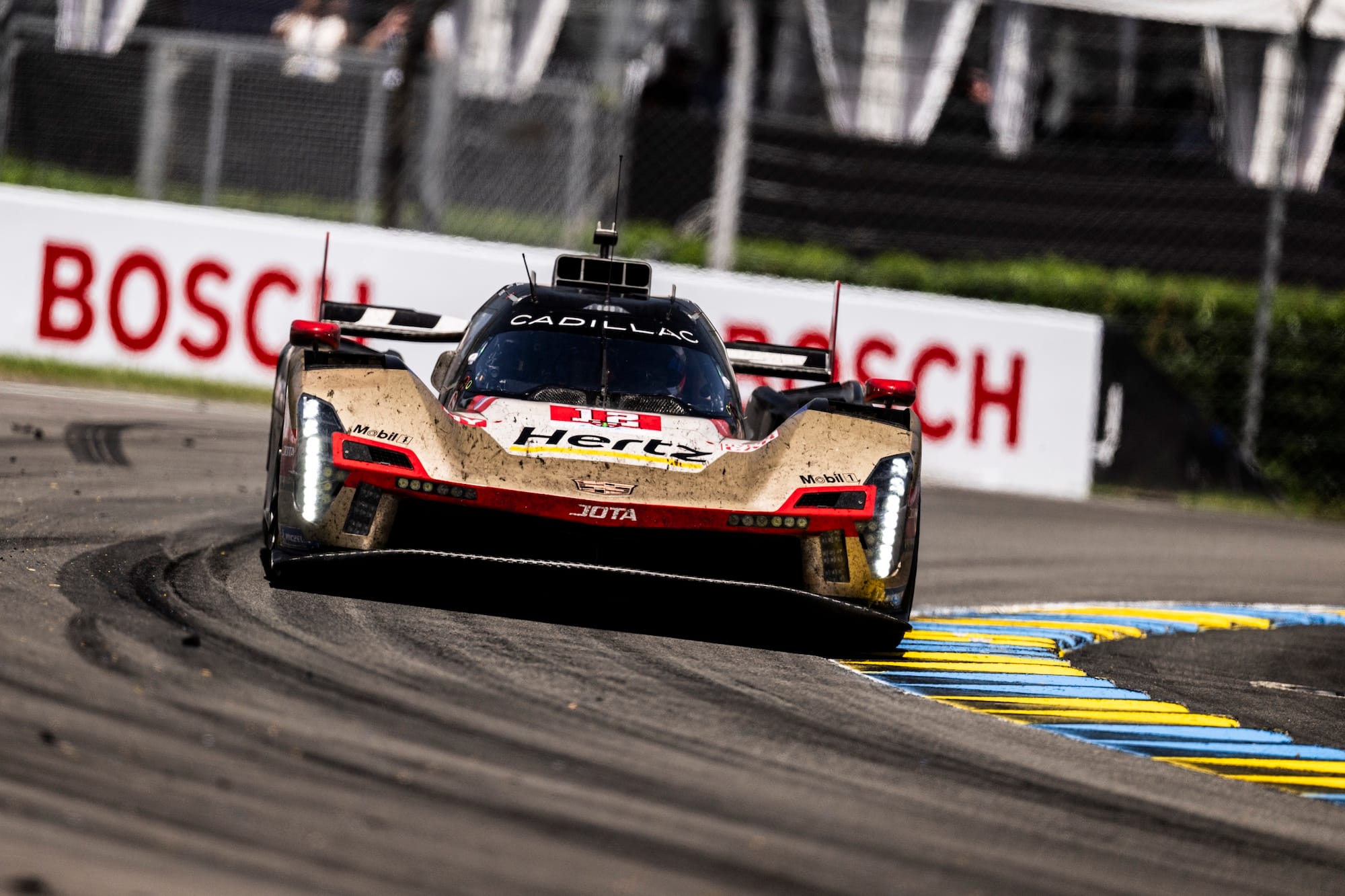
The #12 JOTA-run factory Cadillac led Le Mans for over a third of the race. The sister car led for another 14.7%, totalling almost 50% of the race, 48.3% to be precise, led by a Cadillac.
Another 7 laps, just over half a stint, and the Cadillacs would have led for over half the race.
And yet the best-finishing Cadillac, the #12 in the hands of Will Stevens for the final few stints, was only fourth at the flag, 32.381 seconds behind the winning #7 Toyota of Kamui Kobayashi.
So, what happened? What stopped Cadillac and JOTA taking an undoubtedly popular first overall win for both entities?
Fast in the night
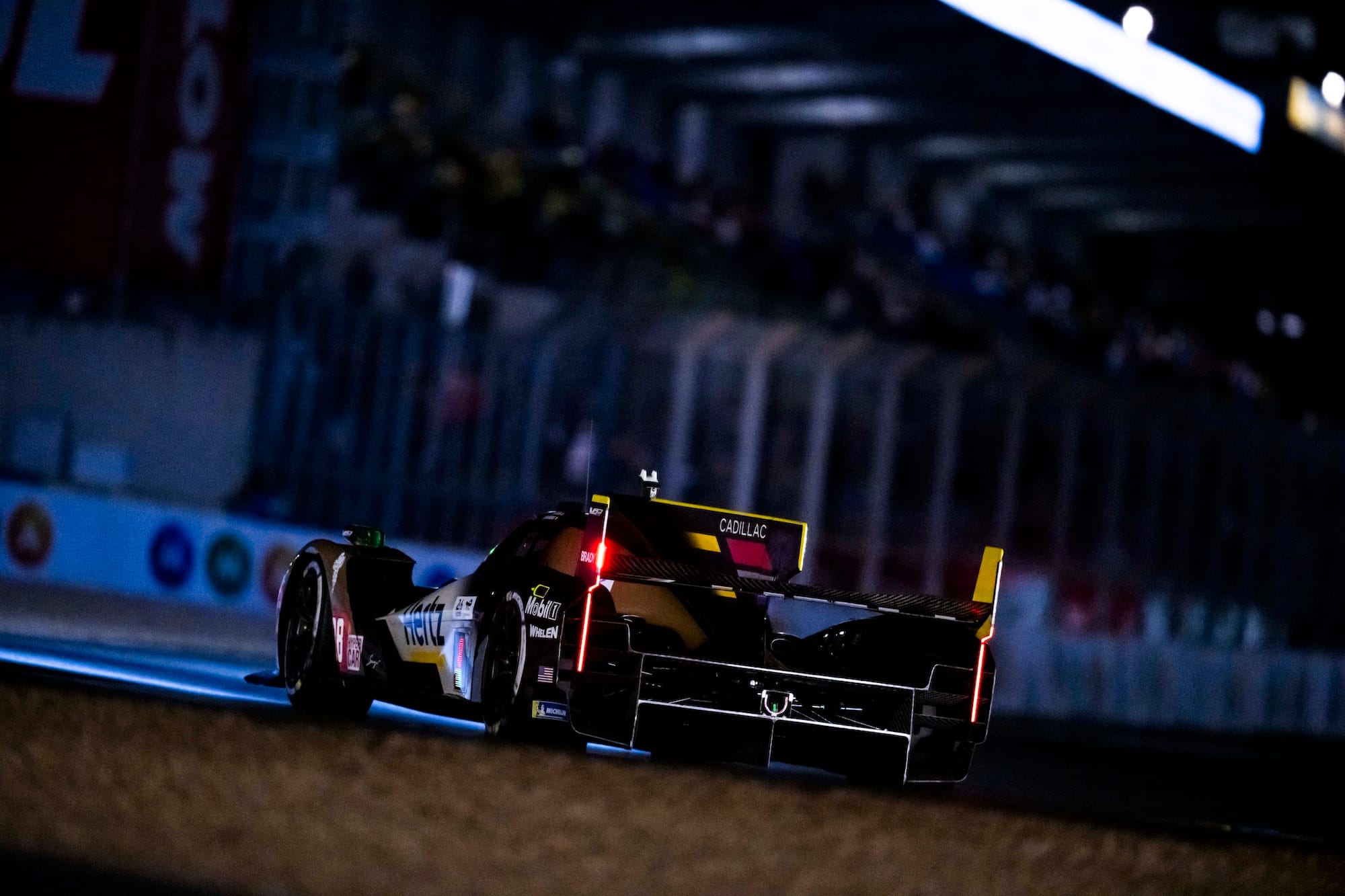
As predicted in my pre-race analysis, the Cadillacs were the pacesetters during the night.
Official sunset was at 21:59 with sunrise 8 hours later at 05:59, correlating with laps 99 to 225.
If we look at the top 20% average laps in this period, the Cadillacs were clearly the strongest cars in the darkness, with cooler track temperatures and cooler ambients as well.
The lowest track temperature of the race, 20.6°C according to Alkamel, was at 06:28, just over 14 hours into the race. This corresponds with lap 233.
#12 Cadillac - Stevens - 3:28.130
#20 BMW - Rast - 3:28.142
#7 Toyota - Conway - 3:29.606
#8 Toyota - Buemi - 3:29.771
The #38 car had, at this point in the race, been pushed back into the garage with the power steering issue which would later cause its retirement from the race at around 8am local time.
So while the Cadillac and BMW set very similar lap times at this point in the race, the two Toyotas were around a second and a half or more off.
But single lap times aren't hugely helpful in a 24 hour endurance race.
The gap evolution and lap position charts for the lap range, 99 to 225, show that while Cadillac and BMW regularly traded the lead, essentially shuffling as each pitted on schedule, they were gradually pulling away from the two Toyotas, who especially towards the end of the stint began to drop back from the leading pair.
Ultimately, on lap 225 when the sun officially rose at 05:59 local time, the order stood at:
- #12 Cadillac - leader
- #20 BMW - 12.379s behind
- #8 Toyota - 47.395 behind
- #7 Toyota - 154.527 behind
By lap 233, the coolest time in the race half an hour later, the gap between the BMW and leading Cadillac had slightly shrunk. The gap to the #7 Toyota had shrunk too, the result of a pitstop around 20 seconds faster than the BMW or Cadillac, possibly due to Conway taking tyres while the others did not.
On average, then, the #12 Cadillac was around a quarter of a second faster a lap in this period, compared to the #8 Toyota, the leading or fastest Toyota at the time (the #7 Toyota would only come into its own late in the race. Indeed, the #7 only led the race for 11.5% of the race, the lowest of any of the leaders).
Over those 127 laps, that quarter-second advantage adds up to 30.7 seconds on the #8. When looking at the #7, where the advantage was greater, that grows to almost 100 seconds, or 1m39s.
And therein lies part of Cadillac's problem.
Support On The Apex's independent sportscar journalism today from £1/$1/€1 a month
Cadillac's inability to open a meaningful gap
Despite the fact Cadillac – and BMW too – was faster during the night, neither team could open a big enough gap that would withstand the race swinging back into Toyota's favour when the sun rose and temperatures increased again.
At lap 99, just before sunset, the #38 Cadillac in the hands of Sebastien Bourdais led by 29 seconds from Robin Frijns in the #20 BMW. Ryo Hirakawa sat third in the #8 Toyota, a further 4.8 seconds off Frijns and 33.8 seconds adrift of Bourdais. Fourth was the #12 Cadillac of Norman Nato, another 5.3 seconds away and 39.1 off the teamcar in the lead.
Of course, we know now that Bourdais later had issues in the #38 and was quickly dropped out of contention.
The #12, meanwhile, would gradually advance through the field during the night to take the lead by early morning.
But the gap Nato, Stevens and Delétraz steadily built simply wasn't enough to maintain that lead.
You'll notice the #7 Toyota is absent from this top 4 list as the sun set over Circuit de la Sarthe. Conway was in the car at the time, 10th, and just over 3 minutes behind Bourdais in the lead.
The #7 had been plagued with sensor issues in the first half of the race, which put the car into limp, safe or backup mode and restricted the amount of power available, until they found a workaround in the second half of the race.
Read more on the challenges faced by Toyota in my report for MotorsportWeek, after I spoke to Kamui Kobayashi in the media mixed zone at the end of the race.
The night hours were better for the #7, so much so that the gap closed by sunrise, from 3 minutes, getting on for an entire lap, to just over 2 and a half. Still not great, and would require all 3 drivers to do the hard yards in the morning happy hour and beyond.
Luck, or not, of the safety car
In total the race featured two safety cars over the 24 hours, alongside five full course yellow periods peppered throughout the race.
Both impacted the lead battle considerably.
The first safety car
The first occurred shortly before midnight local time, lap 128, when Sebastien Buemi was in the leading #8 Toyota.
This safety car actually helped Cadillac considerably. It closed the gap from over 40 seconds for Earl Bamber in third, and almost 85 seconds for the #12 Cadillac of Will Stevens, relative to Buemi in the lead, to 17.2 seconds for Stevens after the race went green again, now in third, and Bamber another second or so behind in fourth.
However, while it helped Cadillac with both cars quite significantly, and undoubtedly enabled them to take the lead, and a 1-2, during the night, it helped the #7 Toyota much, much more.
Before the safety car Conway sat well over 3 and a half minutes off the lead, and was in significant danger of going a lap down.
But, when the race went green again, thanks to the merge and pass around procedure, Conway was now just 22 seconds behind his teammate Buemi in the lead. It's true that he sat seventh, but the gap to the leading cars had been reduced massively.
 Phil Oakley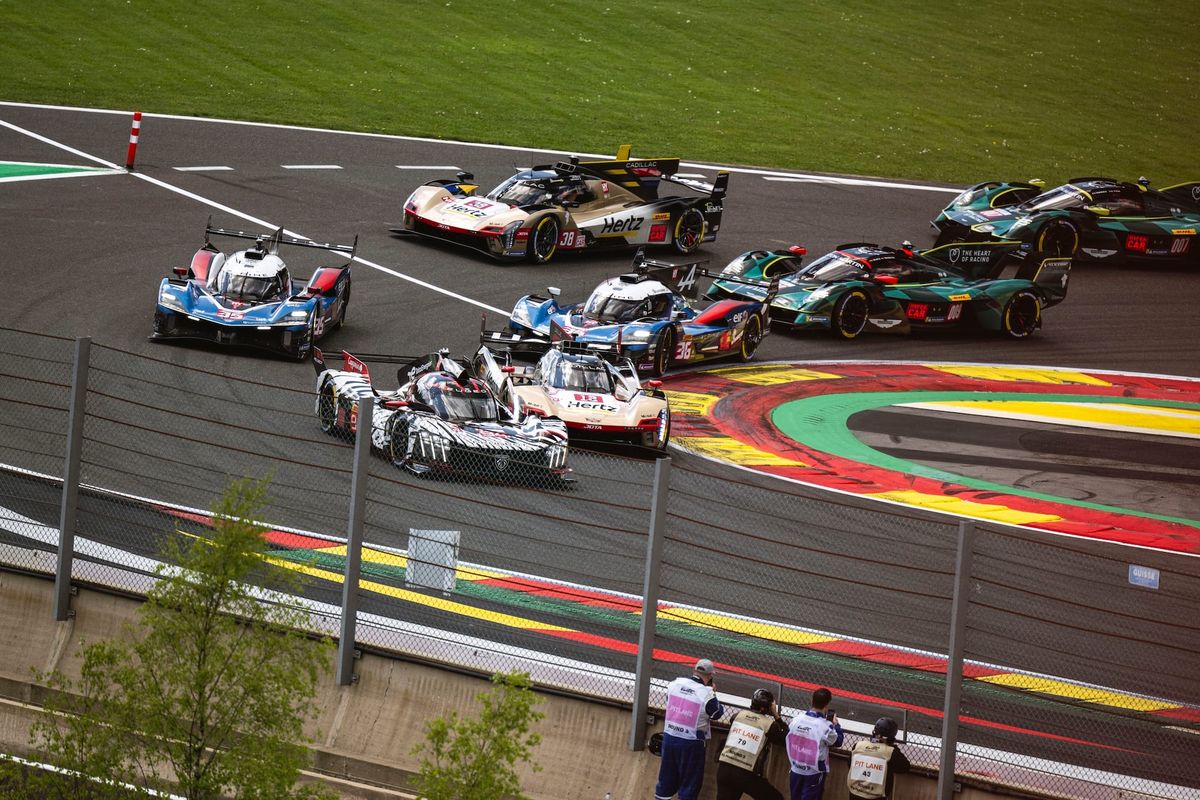
The second safety car
If the first safety car helped Cadillac out – even though it helped Toyota considerably more – the second may be a key reason why Cadillac didn't even finish on the podium at this year's 94th edition of the French endurance classic.
The second of two safety cars was deployed at just past 10am local time as Ayhancan Guven, in the #91 Manthey Porsche, had had a large accident exiting the first chicane.
It lasted almost an hour while the Porsche was recovered and barrier repairs were made.
At the time, on lap 290, Louis Delétraz held a 58.7 second lead on the #20 BMW, which had Robin Frijns at the wheel. The #7 and #8 Toyotas were third and fourth, Kobayashi 103.5 seconds back and Hirakawa 119.2 seconds, almost two minutes, adrift of Delétraz.
Not only did the #12 Cadillac have its gap completely eradicated, but it slipped to second behind Frijns at the restart, with Nato now at the wheel of the JOTA-run car, less than a second adrift of the Dutchman ahead.
Kobayashi and Hirakawa still sat third and fourth, 5.6s and 7.0s off the lead.
Not much more to say here – other than the fact it completely wiped the Cadillac's lead.
And with Toyota's superior pace in the final six hours... not much Cadillac could do from there.
Cadillac's pace drops off in the daylight
With 5 hours of racing left when the safety car returned to the pits for the final time, things at La Sarthe were hotting up, literally and figuratively.
The #7 Toyota turned up the wick at that point and were the quickest car on average in that final five hours.
Depending on which metric you look at – 20% top laps to 100% of laps – the Cadillac looks good, to not so good.
But the main thing here is: they didn't have the pace to challenge the #7 Toyota. Even more so, they couldn't challenge the #20 BMW and #8 Toyota for the podium, finishing fourth. That surely isn't a true reflection of their race, as Louis Delétraz noted.
'First of all, a huge thank you to Cadillac Racing and JOTA, all the crew, mechanics, engineers, for the hard work last ten days,' said Delétraz after the race.
'Obviously, it's a great result, but after leading so much of the race and being up front the whole week, it's still disappointing for sure. But I think we did the maximum we could, the circumstances made it that way. We came here to fight for a win, we never gave up, and we'll be back for more because we are hungry to win this race.'
Drive-through penalty costs more time
The final thing to note for Cadillac's race is a drive-through penalty which occurred shortly before 9am local time, around an hour before the second safety car.
Before taking the penalty on lap 271, which was served for a full course yellow infringement, Delétraz had a 13 second lead to Brendon Hartley in the #8 car.
The lap after he'd taken it, he'd dropped to third behind Hartley and Sheldon van der Linde in the #20 BMW. Nyck de Vries sat fourth almost two minutes off the lead.
A costly penalty. That said, given the lead the #12 Cadillac had when the second safety car came out, it may not have actually mattered, as they may have simply had a bigger gap eliminated by the safety car.
Leading for almost half the race only for it to be reset by incredibly unlucky safety car timing with less than a quarter of the race to go is brutal. That's especially true when Cadillac didn't have the pace to respond, when Toyota found theirs in the afternoon sun.
Will Stevens summed it up well: 'Pretty disappointing to come away with P4,' he said.
'I think honestly we deserved more than that. The pace we showed we should have been on the podium at least. We are more in the mix than last year which is a positive.
'But coming here we had higher hopes than the result we ended up with, so we can’t help but be disappointed. But we’ll come back again next year stronger.'